Welcome to my Blog

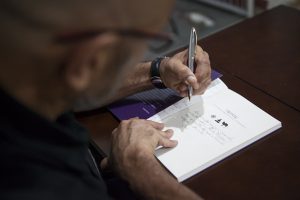
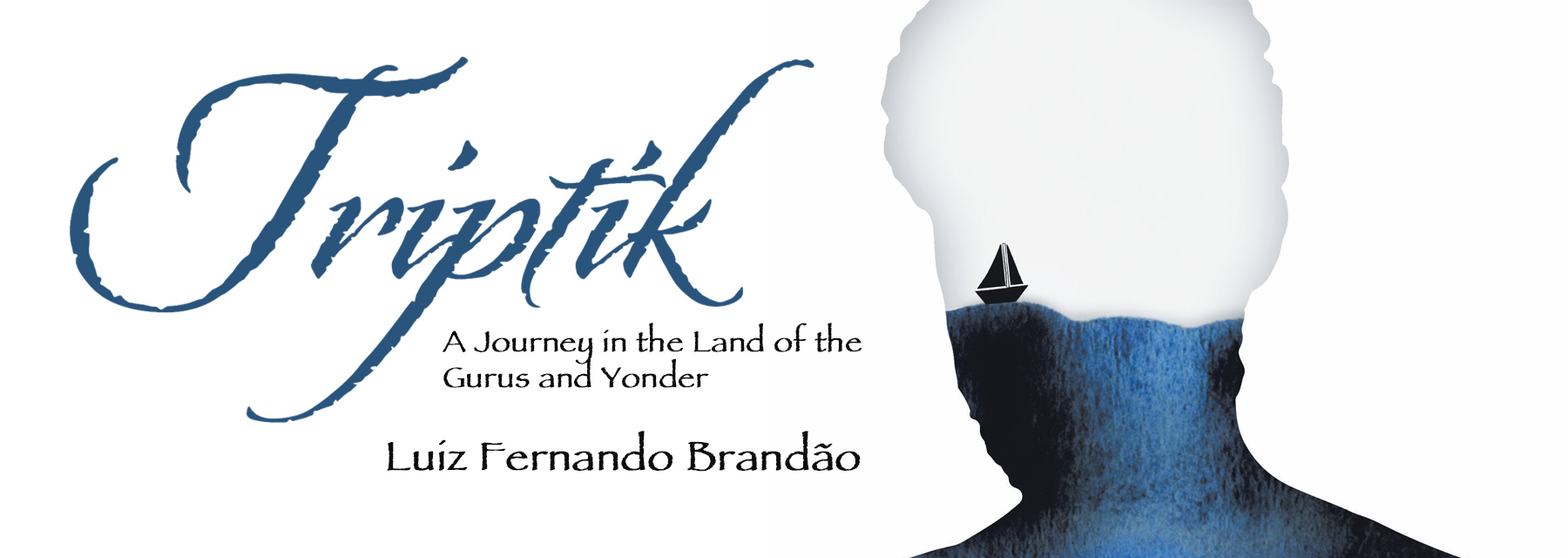
My name is Luiz Fernando Brandão, author of Triptik. I appreciate your visit. This book is very special to me, and I hope to share some of that excitement with you.

I’ll be using this space to talk with you about Triptik. Expanding on some of its topics and discussing some of its ideas.

By the way, what did you think of Triptik? Do you have any questions? How do you relate to it?

I’ll be coming here frequently with new posts and responses to feedback from you. Until next time!

Next stop: Lisbon


There are places that preserve memories like those who tend a flower garden.

Such is the case of the Grémio Literário, in the heart of Lisbon, whose walls are impregnated with the words of Eça de Queiroz, Teixeira de Queiroz, Júlio de Castilho, and so many other timeless names who once animated its afternoons and ideas.

It is in this time-spelled setting that Luiz Fernando Brandão launches the 2nd edition of TRIPTIK – A Journey in the Land of the Gurus and Yonder (Editora Gryphus, 2024), a sensitive voyage through distant lands — and through the soul itself — in a conversation moderated by Professor Claudia Poncioni, from the Sorbonne Nouvelle.

May 5, 2025, at the Grémio Literário.
Lisbon awaits us.

The slow alchemy of the journey

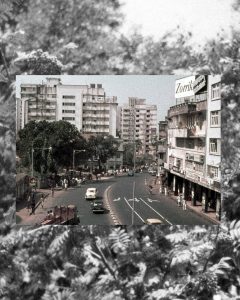
1975. Rio glows between poetry and concrete, caught between the muffled hum of dictatorship and the rebellious spark of counterculture, while Bombay simmers beneath a sky of a thousand suns, where packed trains glide like silver serpents.

Unaware of what’s to come, young Luiz Fernando splits his days between Yoga and the demands of adulthood—until destiny whispers in his ear, a sweet invitation laced with the urgent inevitability of the unknown. And so, with no stamps on his passport, no marked tickets nor mapped-out routes, he sets sail—hitching a ride on a freighter bound for India.

Even today, with digital compasses and ever-present translators, such a journey would feel like a leap between realities. But in 1976? When Bombay was already throbbing with incandescent chaos, and Rio de Janeiro was already, well… Rio de Janeiro?

The ocean, vast as it was, was not the greatest abyss.

The true leap lay between what is known and what has yet to be named. And for those who dare to embark, the destination is never a fixed point on a map, but the slow alchemy of the journey itself—for the seeker, the path always reveals itself.

TRIPTIK is now in its 2nd edition—are you ready for the journey?
Memories from a distant future

Perhaps some destinies, if not all, precede existence. Perhaps some dreams are so vast because, in truth, they are echoes of deeds already lived in another fold of time—memories that shimmer in the distance and beckon from the distant future.

Jules Verne, master of unimaginable journeys, enchanted the young Luiz Fernando Brandão with worlds woven from words. In his pages, ships cut through uncharted seas, balloons defied the skies, and submarines glided through hidden realms long before science made them real. Inspired by these adventures, Luiz Fernando heard the call of the East echoing through his readings and, without waiting for the future to catch up with him, leapt into the present—toward India, toward the vastness of the world, toward the mystery that reveals itself only to those who dare to depart.

Both wrote what they dreamed and dreamed what they would later write.

Perhaps this is the secret of great travelers and writers: to see the journey before taking the first step.

TRIPTIK is now in its second edition – are you up for the trip?

What really matters (all considered) is here and now.

[…] The concept of karma is much more complex than has been popularized in the West. According to the Hindu scriptures, our present and future circumstances are the combined result of three types of cause and effect—samcitta, prarabdha, and kriyamana. The first relates to the karma accumulated in all past lives, which defines our character and innate tendencies. The second is that which bears fruit in the present incarnation and cannot be avoided—for example, the ancestral inheritance registered in our DNA. And the third is the nascent karma, produced by our present actions, whether they are conscious or not. Ultimately, it is the latter that is worthy of more attention, as it will determine the other two.

On the magic of reading…

“When I read a book I seem to read it with my eyes only, but now and then I come across a passage, perhaps only a phrase, which has a meaning for me, and it becomes part of me; I’ve got out of the book all that’s of any use to me, and I can’t get anything more if I read it a dozen times. You see, it seems to me, one’s like a closed bud, and most of what one reads and does has no effect at all; but there are certain things that have a particular significance for one, and they open a petal; and the petals open one by one; and at last the flower is there.”
Somerset Maugham (1874-1965)
Of Human Bondage

Why tell this story 40 years after?

(…) And so it is only now, when I play the third and penultimate period of a game in whose final phase I am unable to guarantee my presence, that I think the time has come to share it. I say this because I believe in the ancient writings of Indian Ayurveda medicine, which state the human body is a “machine” designed to function for a hundred years, which depends only on the quality of the fuel, the way of use, and the maintenance pattern. I intend to remain alive for a long time yet, but it is always wise to prevent something that definitely is not curable.